The Long Count · 4 min
The quiet one
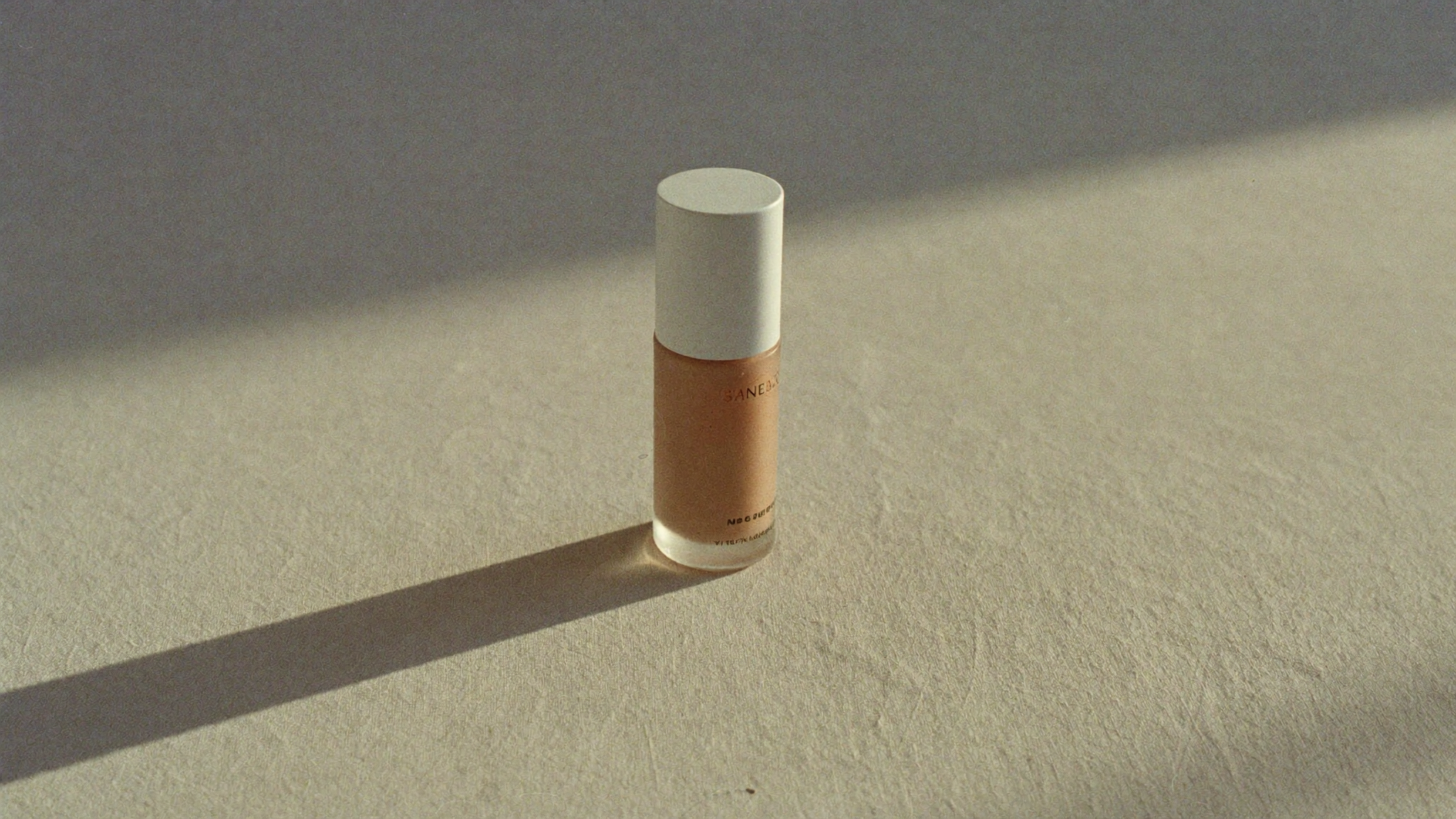
On IV — The Niacinamide Serum
Every routine has a workhorse — the step you forget you are using until you stop, and only then notice what it was quietly holding together. In this range, that is niacinamide.
It will not give you a dramatic before-and-after. What it gives you is a barrier that copes better and a tone that looks more even over time. Unglamorous, well-evidenced, and the reason it sits near the centre of most sensible routines.
What niacinamide is doing down there
Niacinamide is a form of vitamin B3, and it has an unusually broad evidence base at the ingredient level. The part most relevant to a longer-horizon brand is what it does for the barrier.
Your skin barrier is held together by lipids — ceramides, fatty acids and cholesterol, arranged between the outer cells like mortar between bricks. When that mortar is depleted, water escapes more easily, and skin feels tight, reactive and easily irritated. The measurable version of this is transepidermal water loss: how much water passes out through the skin.
In laboratory studies, niacinamide has been shown to increase the skin's own production of these barrier lipids — ceramides, free fatty acids and cholesterol — by stimulating the machinery that makes them. Applied topically, it has been associated with higher ceramide levels in the outer skin and reduced water loss in dry skin. In one study, a 5% niacinamide cream over four weeks was linked to a thicker outer skin layer and lower water loss compared with the base alone.
That is the mechanism, and it is why niacinamide reads as "the barrier one" even though it also has a reputation for tone. It helps the skin build more of what keeps water in.
Why 5% and not more
You will see niacinamide sold at 10% and higher, on the logic that more must be better. We use 5% on purpose.
The barrier and tone benefits are well documented in the 2–5% range. Push much past that and the added benefit is small while the irritation risk climbs faster — flushing, tightness, the occasional reaction in people who tolerate lower levels fine. A higher number on the label is easy to print. It is not the same as a better outcome. We would rather sit at the concentration where the evidence is strongest and the tolerance is highest, and let you use it every day without thinking about it.
The tone question, honestly
Niacinamide is also associated in the literature with a more even-looking skin tone over time. Read that carefully: the look of evenness, over time. It is not a treatment for any pigmentation disorder, and it is not fast. Barrier changes tend to show up first, within roughly four to eight weeks; tone takes longer and asks for more patience.
The mechanism, at ingredient level, is worth a line. One thing niacinamide has been studied for is its effect on the transfer of pigment from the cells that make it to the surface cells that carry it upward — moderating that hand-off is associated with a more even-looking surface over time. That is a gradual, appearance-level effect, not a switch. It stacks slowly on top of the barrier work rather than replacing it.
We say "even-looking" rather than making a stronger claim because that is what the ingredient supports — the appearance of tone — and because a normal, healthy variation in skin is not a defect to be corrected. Niacinamide helps skin look more even. It is not in the business of making anyone feel their face was a fault.
Why it belongs in almost every routine
The quiet advantage of niacinamide is how little it asks. It layers comfortably with hyaluronic acid, with sunscreen, with a retinoid on the nights you use one. It rarely conflicts with anything. You can use it morning, night or both.
Genuine sensitivity to niacinamide exists — it is uncommon, but some people do flush with B3 products, and if that is you, this will do the same. Patch test first, as with anything new.
Beyond that, niacinamide is about as close to a default as this range has. It does not announce itself. It supports the structure the rest of the routine is built on, day after day, and it does its best work in aggregate — which is, in the end, the only way skin is ever actually maintained.
This piece describes niacinamide research at the ingredient level, not a claim about a specific outcome. Patch test before regular use.