The Long Count · 5 min
Defence, not correction
On III — The Vitamin C Serum
Vitamin C is sold as the ingredient that brightens. That is not wrong, exactly, but it frames the ingredient around the wrong job. Vitamin C is most usefully understood as defence. It is the antioxidant half of a morning routine, standing next to your sunscreen, and it is best judged over months rather than mornings.
What an antioxidant is for
Every day your skin is hit by free radicals — unstable molecules generated by ultraviolet light and pollution that damage cells and, over time, the matrix that holds skin taut. Antioxidants neutralise those molecules. Your skin makes its own, but daily exposure outpaces the supply, which is where a topical antioxidant earns its place.
L-ascorbic acid — the purest, best-studied form of vitamin C — is one of the most researched antioxidants in the skincare literature. Topically, it neutralises free radicals and plays a documented role in collagen synthesis pathways. Note the framing: that is a statement about the ingredient's role in skin biology, not a promise that a bottle will rebuild your face. We hold it there deliberately.
Why our serum is not just vitamin C
Vitamin C rarely works alone in a good formula, and ours doesn't. It sits with 0.5% ferulic acid and 1% vitamin E, and the reason is one of the more elegant findings in the field.
In work led by the dermatologist Sheldon Pinnell, a solution of L-ascorbic acid and vitamin E was shown to protect skin from ultraviolet-induced damage — and adding ferulic acid both stabilised the vitamins and roughly doubled that photoprotective effect. The three work together: vitamin C is water-soluble and vitamin E is lipid-soluble, so they cover different compartments of skin, while ferulic acid holds the whole system stable and amplifies it.
That research was done on a specific formulation, so we describe it as ingredient-level evidence rather than a claim about our exact bottle. But the logic of the trio is why the combination, not vitamin C by itself, has become the reference point for antioxidant serums.
The two details that decide whether it works
Vitamin C is famously temperamental, and two practical details separate a working serum from an expensive orange liquid.
The first is pH. L-ascorbic acid is only well absorbed into skin when it is acidic — around pH 3.5 or below. Ours sits at 3.2. A slight tingle on application at this pH is normal; stinging is not, and it usually means the skin is compromised or freshly exfoliated.
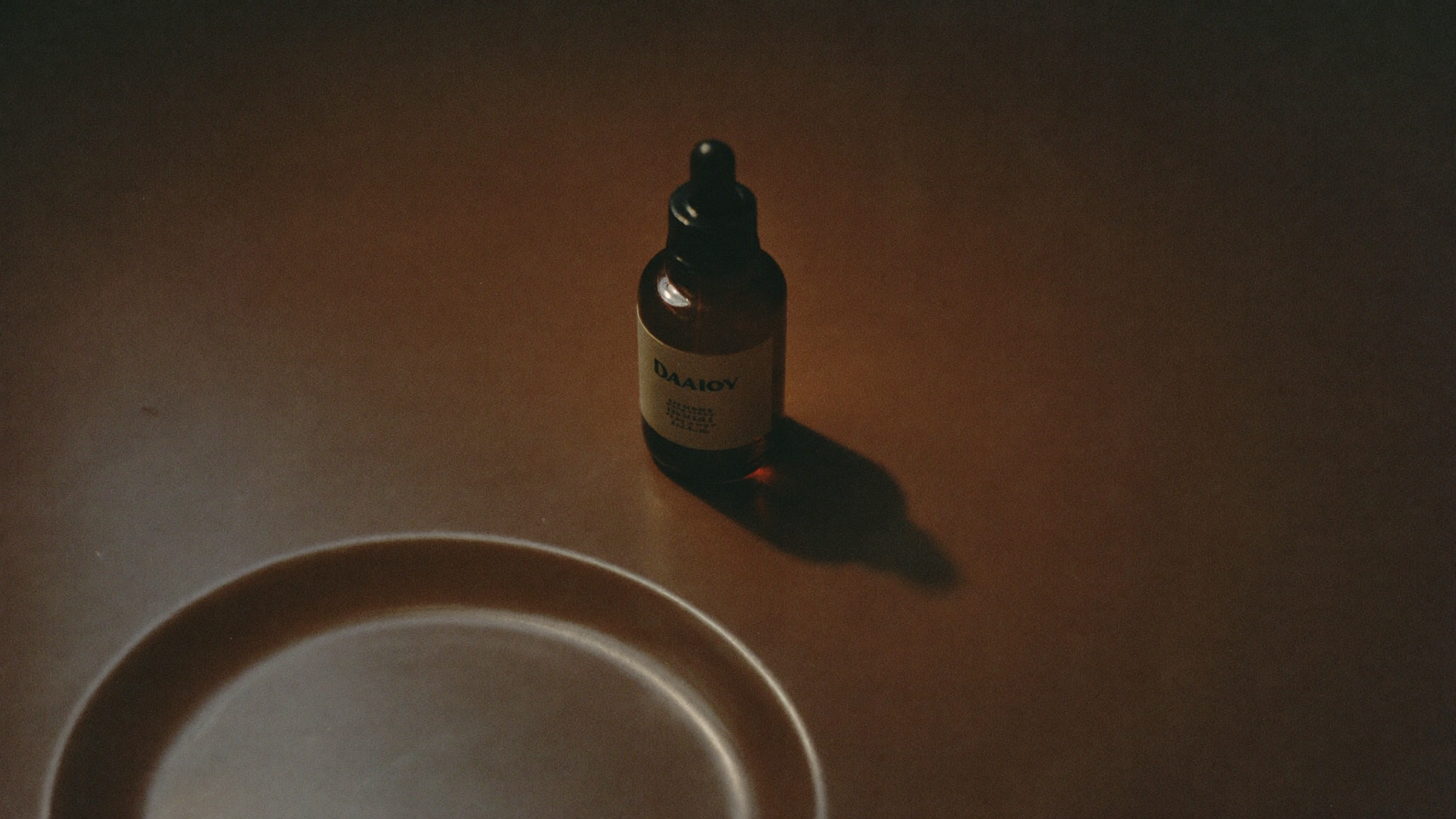
The second is packaging. Ascorbic acid oxidises — reacts with light and air and loses potency, turning from clear to yellow to brown. That is why ours lives in an amber, airless bottle rather than a clear dropper. A vitamin C serum you can watch darkening on the shelf is a vitamin C serum slowly becoming inert. Keep it closed, keep it out of the light, and don't hold on to an open bottle for a year.
What to reasonably expect
Here is the honest timeline. The look of tone changes slowly. Expect eight to twelve weeks before you would trust what you see in the mirror, and understand that "even tone" means the appearance of evenness, not the treatment of any condition. Vitamin C is defence that compounds; it is not a corrector that strips years away on demand.
Its real value is as a pairing. Applied in the morning, on dry skin, under sunscreen, it is the defensive layer while your SPF does the blocking. The two are complementary: sunscreen reduces the ultraviolet reaching your skin, and the antioxidant helps mop up the free radicals from what gets through. Neither replaces the other.
How to fit it in
Morning, after cleansing, before moisturiser and sunscreen. Give it a moment to settle. Do not layer it in the same routine as the retinal serum — split them, vitamin C in the morning and the retinoid at night, so the two low-pH, active steps aren't competing for the same skin at the same time. And patch test first, especially if your skin runs reactive.
Used this way, vitamin C stops being the ingredient you expect a dramatic week from and becomes what it actually is: a quiet, daily piece of defence, protecting the structure you are slowly building. Which is the only kind of skincare this brand really believes in.
This piece describes antioxidant research at the ingredient and formulation level, not a claim about a specific result. The serum is acidic; avoid on compromised or freshly exfoliated skin, and patch test first.